
Break Free from EMI Stress
Smart strategies for financial freedom
Too stressed to read the full guide? Here are the key takeaways:
- Keep EMIs below 40% of your monthly income (ideally 30-35%)
- Attack high-interest debt first - Credit cards (36%) → Personal loans (15%) → Car loans (11%)
- Balance transfer can save ₹2,000-₹5,000/month by reducing interest rates
- Part-prepayment of ₹1L in Year 2 saves ₹5.2 lakhs in interest
- Build ₹25-50K emergency fund first to avoid new debt during emergencies
- Side income of ₹15-20K/month can clear personal loans 2x faster
- Follow the 30-day action plan below to start your debt-free journey
Reading time: 10 minutes • Potential savings: ₹3-12 lakhs over loan tenure
Are multiple EMI payments draining your monthly salary? You're not alone. According to recent RBI data, 68% of Indian middle-class households carry at least one active loan, with many juggling home loans, car loans, personal loans, and credit card debt simultaneously. The constant pressure of meeting EMI deadlines can turn your dream of financial freedom into a monthly nightmare.
The good news? With strategic planning and smart decision-making, you can break free from EMI stress without drastic lifestyle changes. This comprehensive guide walks you through proven strategies that have helped thousands of Indian families regain control of their finances.
🚨 The Hidden Cost of EMI Stress
Before diving into solutions, let's understand the real impact of excessive EMI burden:
- Zero Savings: When 50-60% of income goes to EMIs, there's nothing left for emergencies or investments
- Mental Health: Constant financial worry leads to anxiety, sleep problems, and relationship stress
- Career Decisions: Fear of losing income locks you into unfulfilling jobs
- Wealth Creation: Unable to invest during wealth-building years (30s-40s)
- Emergency Vulnerability: Medical emergencies or job loss can trigger a debt spiral
EMI < 30% Caution
EMI 30-40% Danger
EMI > 40%
✓ EMIs exceed 40% of monthly income
✓ Using credit cards to pay other EMIs
✓ No emergency fund (less than 3 months' expenses)
✓ Delaying essential purchases or medical treatments
✓ Constantly thinking about money and feeling anxious
📊 Step 1: Get a Clear Picture of Your Debt
You can't solve a problem you don't understand. Start by creating a comprehensive debt inventory:
Create Your Debt Dashboard
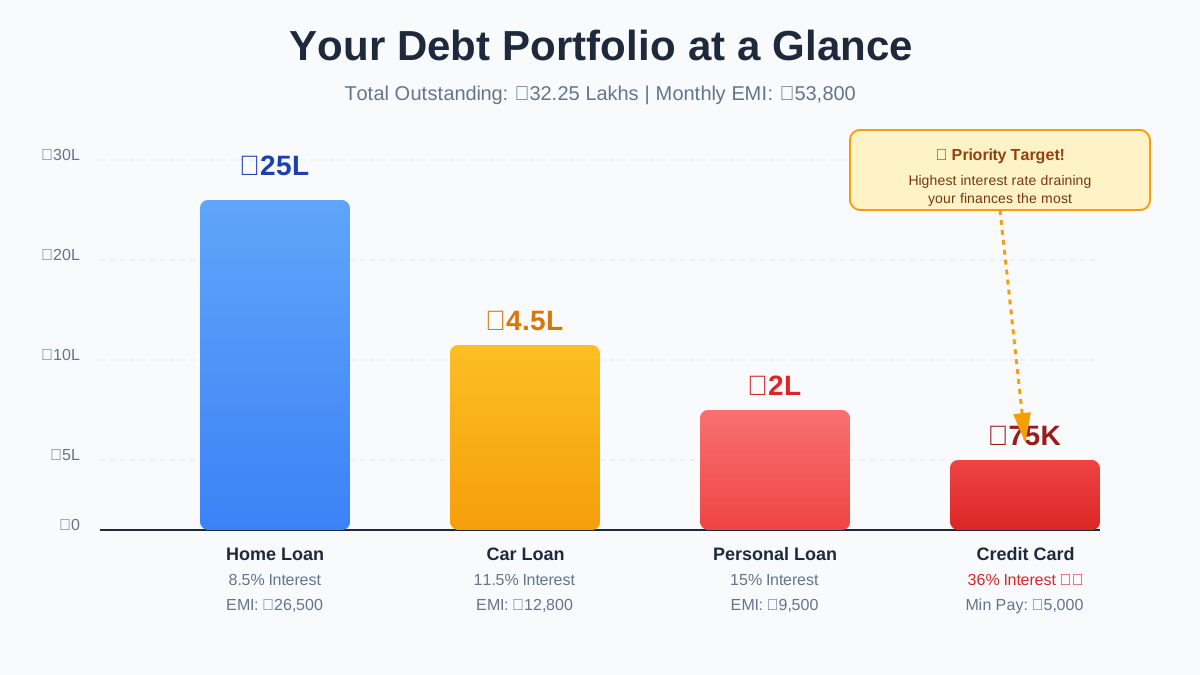
| Loan Type | Outstanding Amount | Interest Rate | EMI Amount | Tenure Left |
|---|---|---|---|---|
| Home Loan | ₹25,00,000 | 8.5% | ₹26,500 | 15 years |
| Car Loan | ₹4,50,000 | 11.5% | ₹12,800 | 3 years |
| Personal Loan | ₹2,00,000 | 15% | ₹9,500 | 2 years |
| Credit Card | ₹75,000 | 36% | ₹5,000 (minimum) | - |
| Total | ₹32,25,000 | - | ₹53,800 | - |
Key Insight: Notice how the credit card debt has the highest interest rate? That's your priority target.
💡 Calculate Your Exact EMI Burden
Use our free EMI calculator to see the total interest you'll pay over the loan tenure.
Calculate Your EMI →🎯 Strategy 1: The Avalanche Method (High-Interest First)
This mathematically optimal approach focuses on eliminating high-interest debt first while making minimum payments on others.
How It Works:
Example: Ajay's Debt Elimination Plan
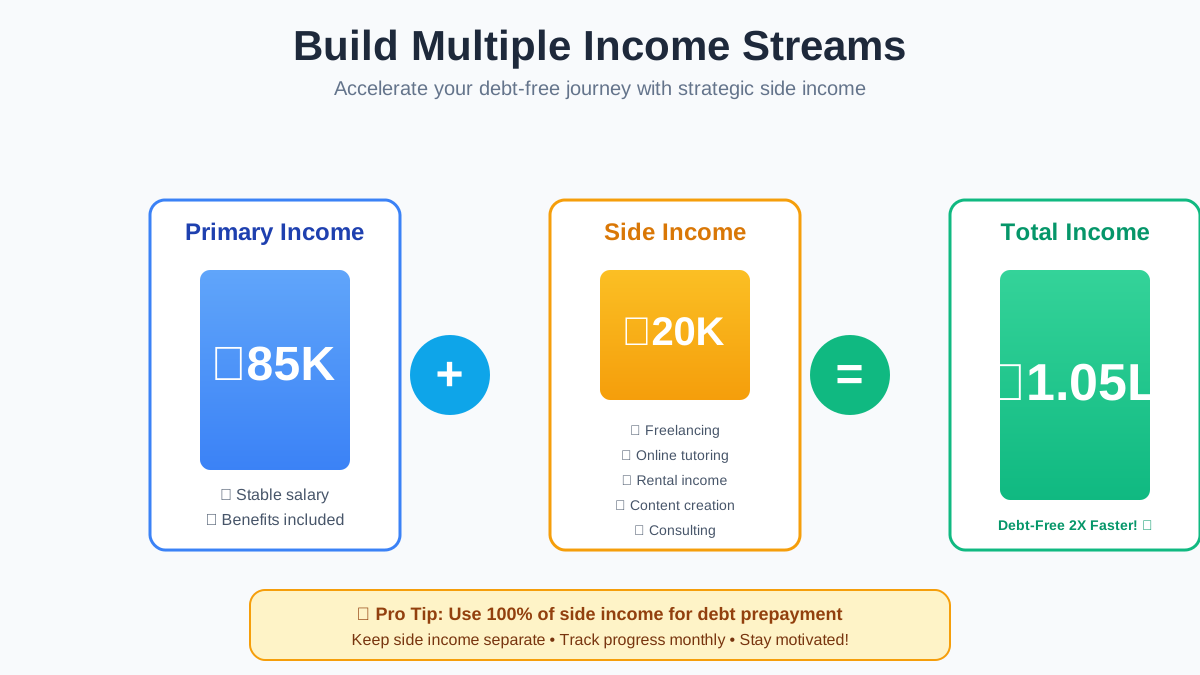
Monthly Income: ₹85,000
Current EMIs: ₹48,000 (56% of income)
Available Extra Amount: ₹10,000/month
Step-by-Step Plan:
- Month 1-8: Pay credit card debt (₹75,000 @ 36%) with extra ₹10,000/month. Cleared in 8 months!
- Month 9-24: Target personal loan (₹2L @ 15%) with the freed-up ₹15,000 (₹5,000 from credit card + ₹10,000 extra). Cleared in 16 months instead of 24!
- Month 25 onwards: Add ₹24,500 to home loan prepayment. Reduces tenure by 5 years, saves ₹12 lakhs in interest!
Result: In 2 years, Ajay eliminated 2 loans and is on track to become debt-free 5 years earlier.
Why This Works
- Minimizes total interest paid
- Creates momentum as debts get eliminated
- Frees up cash flow progressively
💳 Strategy 2: Balance Transfer (Cut Your Interest Rate)
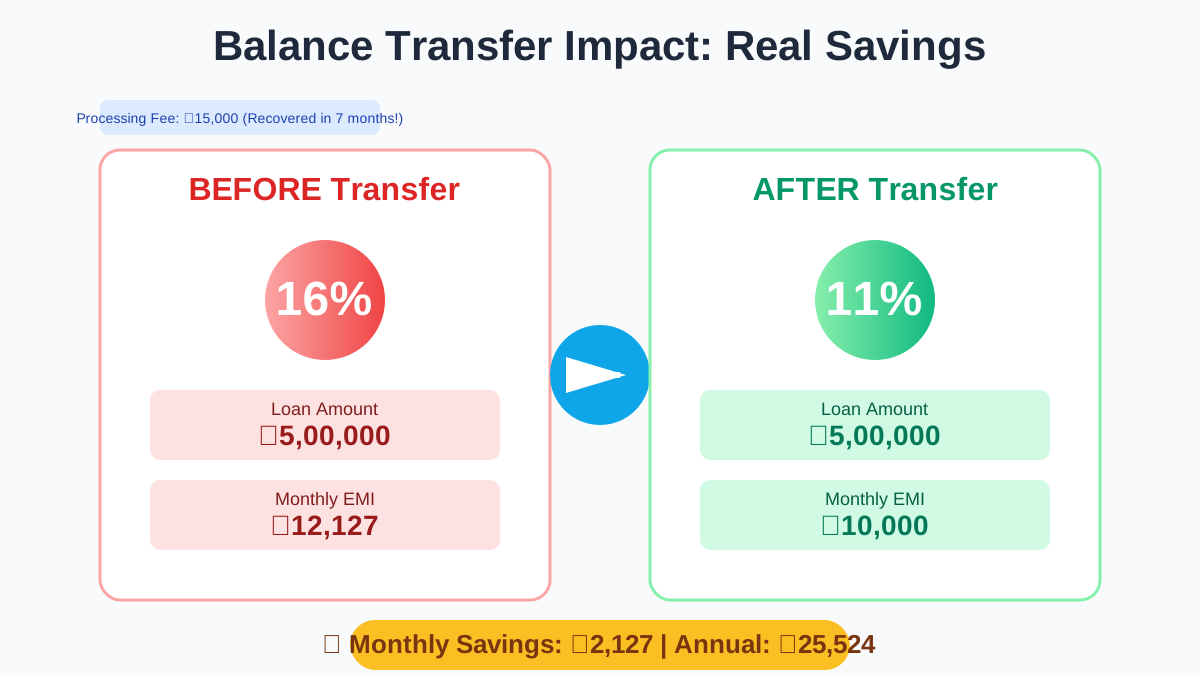
Balance transfer can reduce your interest burden significantly, especially for personal loans and credit cards.
When to Consider Balance Transfer
| Loan Type | Current Rate | Transfer Rate | Monthly Savings |
|---|---|---|---|
| Personal Loan (₹5L) | 16% | 11% | ₹2,100 |
| Home Loan (₹25L) | 9.5% | 8.4% | ₹2,200 |
| Car Loan (₹4L) | 12% | 9% | ₹900 |
Balance Transfer Checklist
- Processing fee should be recovered within 12 months of interest savings
- Check for prepayment penalties on existing loan
- Ensure your credit score is 750+ for best rates
- Read fine print for rate reset clauses
- Consider total cost, not just EMI reduction
Real Case Study: Priya's Home Loan Transfer
Original Loan: ₹30 lakhs @ 9.2%, 18 years left, EMI ₹28,900
After Transfer: ₹30 lakhs @ 8.4%, 18 years, EMI ₹27,200
Processing Fee: ₹15,000
Monthly Savings: ₹1,700
Annual Savings: ₹20,400
18-Year Savings: ₹3,67,200 (after deducting ₹15,000 fee)
Result: Priya recovered the fee in 9 months and will save over ₹3.5 lakhs over the loan tenure.
🔄 Strategy 3: Debt Consolidation
If you're juggling multiple loans, consolidating them into a single loan can simplify payments and potentially reduce interest.
How Debt Consolidation Works
• Car Loan: ₹12,500 @ 11%
• Personal Loan: ₹8,500 @ 15%
• Credit Card: ₹6,000 @ 36%
• Total EMI: ₹27,000
After Consolidation:
• Single Personal Loan: ₹22,000 @ 12%
• Savings: ₹5,000/month, ₹60,000/year
Best Options for Debt Consolidation
- Personal Loan: For unsecured debts (credit cards, small loans)
- Home Loan Top-Up: Lowest rates (8-9%) if you have home loan running
- Loan Against Property: For large amounts (₹10L+), rates around 9-10%
- Gold Loan: Quick processing, 7-9% interest for short-term needs
💰 Strategy 4: Increase Income Streams
While cutting expenses helps, increasing income accelerates debt elimination dramatically.
Realistic Side Income Ideas for Middle-Class Families
| 💼 Income Source | ⏰ Time Investment | 💰 Potential Earnings | 🚀 Getting Started |
|---|---|---|---|
|
💻
Freelance Skills Writing, Design, Development |
10-15 hrs/week | ₹15,000-₹40,000 /month |
Upwork • Fiverr • LinkedIn |
|
📚
Online Tutoring Academic subjects, Skills |
8-12 hrs/week | ₹10,000-₹30,000 /month |
Vedantu • Unacademy • Chegg |
|
🏠
Rental Income Spare room, Parking space |
Minimal Passive |
₹8,000-₹15,000 /month |
OLX • 99acres • NoBroker |
|
📹
Content Creation YouTube, Instagram, Blog |
10-20 hrs/week | ₹5,000-₹50,000 after 6-12 months |
YouTube • Instagram • Medium |
|
💼
Weekend Consulting Your professional expertise |
5-8 hrs/week | ₹20,000-₹60,000 /month |
Professional Network • LinkedIn |
Success Story: Rahul's Weekend Transformation
Rahul, a software engineer, started weekend consulting for small businesses needing website setup. Initial earnings: ₹15,000/month. Within 8 months, grew to ₹45,000/month through referrals.
Impact on Debt:
Used entire side income for debt prepayment
Eliminated personal loan in 18 months instead of 3 years
Total interest saved: ₹1.2 lakhs
🏠 Strategy 5: Smart Home Loan Management
For most middle-class families, home loan is the biggest EMI. Small optimizations here create massive savings.
Part-Prepayment Strategy
Even small prepayments early in the loan tenure create huge savings:
| Prepayment Amount | Made in Year | Tenure Reduction | Interest Saved |
|---|---|---|---|
| ₹1,00,000 | Year 2 | 2 years 3 months | ₹5.2 lakhs |
| ₹1,00,000 | Year 5 | 1 year 9 months | ₹3.8 lakhs |
| ₹1,00,000 | Year 10 | 1 year 2 months | ₹2.1 lakhs |
Key Insight: ₹1 lakh prepaid in Year 2 saves 2.5x more interest than the same amount prepaid in Year 10!
Should You Reduce EMI or Tenure?
- Reduce Tenure: If cash flow is comfortable, saves more interest
- Reduce EMI: If currently stressed, provides immediate relief (but pays more interest)
- Hybrid Approach: Reduce EMI slightly, invest the savings, prepay yearly with returns
⚠️ Strategy 6: Emergency Fund First
This might sound counterintuitive, but having an emergency fund prevents new debt when unexpected expenses hit.
Phase 1 (Months 1-3): Build ₹25,000-₹50,000 starter fund
Phase 2 (Months 4-12): Grow to 3 months' expenses
Phase 3 (Ongoing): Gradually reach 6 months' expenses
Keep in liquid funds or savings account for instant access
Why Emergency Fund Matters
Without emergency fund, unexpected expenses force you to:
- Use credit card (36% interest)
- Take personal loan (14-18% interest)
- Miss EMI payments (penalties + credit score damage)
With emergency fund, you handle emergencies without derailing debt repayment plan.

🚫 What NOT to Do When in EMI Stress
Common Mistakes That Make Things Worse
1. Taking Loan to Pay EMI
Never use a personal loan or credit card to pay another EMI. This creates a debt spiral with compounding interest.
2. Ignoring Communication with Lender
If you're struggling, contact your bank immediately. Most offer EMI moratorium or restructuring options for temporary hardship.
3. Focusing Only on Low EMI
A 7-year car loan might have lower EMI than a 5-year loan, but you'll pay significantly more interest. Focus on total cost.
4. Completely Stopping Investments
While prioritizing debt is smart, stopping SIPs entirely means missing compounding years. Consider reducing but not eliminating.
5. Withdrawing PF/PPF for Debt
These are long-term wealth builders. Withdrawing early means paying taxes, penalties, and losing compounding. Use only as absolute last resort.
📋 30-Day EMI Stress Action Plan
Week 1: Assessment
Create debt inventory, check credit score, review expenses
Week 2: Quick Wins
Request rate reductions, check balance transfer offers
Week 3: Strategy
Implement debt elimination plan, set up auto-payments
Week 4: Income Boost
Start side income, schedule monthly reviews
Week 1: Assessment
- Create debt inventory with all loan details
- Calculate EMI-to-income ratio
- Check credit score (free on apps like CIBIL, Paisabazaar)
- Review last 3 months' bank statements to identify expense leaks
Week 2: Quick Wins
- Call credit card companies, request interest rate reduction
- Check balance transfer offers from competitor banks
- List items to sell (unused gadgets, duplicate items)
- Start tracking daily expenses
Week 3: Strategy Implementation
- Decide debt elimination order (avalanche method)
- Set up automatic transfers for extra debt payments
- Apply for balance transfer if viable
- Open separate savings account for emergency fund
Week 4: Income Boost
- Update LinkedIn profile for freelance opportunities
- List spare room on rental platforms
- Reach out to network for consulting opportunities
- Schedule monthly review to track progress
🧮 See Your Debt-Free Timeline
Calculate how soon you can be debt-free with different prepayment strategies.
Plan Your Debt-Free Journey →📥 Download Your Free EMI Action Checklist
Get a printable PDF with all strategies, checklists, and calculation templates in one place.
📄 Download PDF ChecklistClick to save/print this page as PDF from your browser
🎯 Setting Realistic Goals
Don't aim for overnight transformation. Set achievable milestones:
| Timeline | Milestone | Success Indicator |
|---|---|---|
| 3 Months | Emergency Fund Started | ✓ ₹25,000-₹50,000 in savings |
| 6 Months | High-Interest Debt Reduced | ✓ Credit card cleared or 50% reduced |
| 12 Months | EMI Ratio Improved | ✓ EMI below 40% of income |
| 24 Months | One Loan Eliminated | ✓ Personal loan or car loan closed |
| 36 Months | Investment Restart | ✓ SIP of ₹5,000-₹10,000 running |
💡 Pro Tips from Financial Advisors
- Annual Bonus Strategy: Use 70% of bonus/increment for debt prepayment, 30% for celebration. This keeps you motivated while making progress.
- Automate Prepayments: Set up standing instruction for prepayment on salary day. You won't miss what you don't see.
- Negotiate Everything: Call your loan providers annually. A good payment history gives you leverage for rate reduction.
- Tax Planning: Home loan principal (₹1.5L under 80C) and interest (₹2L under 24b) give tax benefits. Factor this into your strategy.
- Side Income, Main Impact: Keep side income separate. Use 100% for debt. This creates clear financial boundaries.
❓ Frequently Asked Questions
Click on any question to see the answer
📚 Related Articles You Might Find Helpful
Disclaimer: This article is for informational purposes only and does not constitute professional financial advice. Loan products, interest rates, and terms vary by lender and individual circumstances. Please consult a certified financial planner for personalized guidance on your specific situation.
Last Updated: May 27, 2026 | Reading Time: 10 minutes