
Stop Bleeding Money on Credit Cards
The ₹50,000/year mistake most Indians make
Don't have time to read? Here's what you need to know:
- The Trap: Paying only the minimum due (5% of balance) at 36-42% annual interest
- The Cost: ₹1 lakh debt becomes ₹2.5 lakhs over 10+ years
- The Fix: Pay full balance monthly, or at least 3x minimum payment
- Interest Shock: 3% monthly = 36% yearly (banks show only monthly rate)
- Credit Score Impact: High utilization (>30%) damages your credit score
- Hidden Fees: Late fees, over-limit fees, cash advance charges add up fast
- Action Plan: Snowball method to clear debt in 18-24 months
Reading time: 12 minutes • Potential savings: ₹50,000+ per year
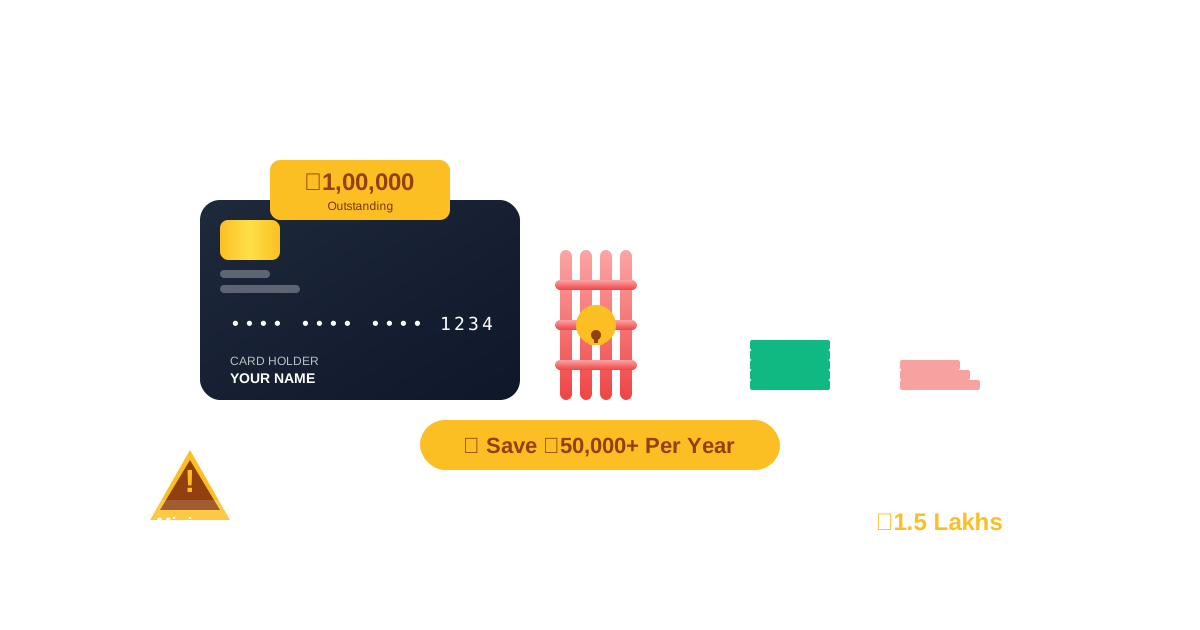
Rahul's story will sound familiar. He has a ₹1 lakh outstanding on his credit card. Every month, he religiously pays the "minimum due" of ₹5,000, thinking he's being financially responsible. Fast forward 3 years: he's paid ₹1.8 lakhs but still owes ₹85,000. Confused? Welcome to the minimum payment trap—the costliest credit card mistake in India.
If you're reading this, chances are you or someone you know is caught in this same trap. The good news? Once you understand how it works, breaking free is straightforward. Let's dive in.
🪤 The Minimum Payment Trap Explained
Credit card companies require you to pay a "minimum amount due" each month, typically 5% of your outstanding balance. Sounds reasonable, right? Here's the catch:
⚠️ The Shocking Math
Scenario: ₹1,00,000 credit card debt at 3% monthly interest (36% annual)
- Minimum Payment (5%): ₹5,000 per month
- Interest Charged: ₹3,000 per month (3% of ₹1L)
- Principal Reduction: Only ₹2,000!
Result: It takes 10+ years and ₹1.5+ lakhs in interest to clear this debt!
Real Example: Minimum Payment Journey
| Month | Balance | Interest (3%) | Min Payment | New Balance |
|---|---|---|---|---|
| 1 | ₹1,00,000 | ₹3,000 | ₹5,000 | ₹98,000 |
| 12 | ₹75,420 | ₹2,263 | ₹3,771 | ₹73,912 |
| 36 | ₹42,851 | ₹1,286 | ₹2,143 | ₹41,994 |
| Total Paid | After 3 years | ₹1.8L paid, ₹58K debt remains! | ||
💰 The Real Cost: Breaking Down the Numbers
Let's compare three payment strategies on the same ₹1 lakh debt:
💡 Key Insight
By paying just 3X the minimum (₹15,000 instead of ₹5,000), you save ₹1,37,500 in interest and clear your debt in 9 months instead of 10+ years!
🧠 Why Banks Love This Trap
Credit card companies design this system deliberately. Here's why:
- Compound Interest Magic: 3% monthly compounds to 42.6% annually (not just 36%)
- Low Default Risk: You keep paying, so banks don't lose money
- Psychological Hook: "I'm paying on time" feels responsible
- Legal Gray Area: Disclosing monthly rates (3%) hides annual reality (36-42%)
- Profit Maximization: Interest charges are banks' highest margin product
The Hidden Compounding Effect
Bank Says: "3% monthly interest rate"
You Think: 3% × 12 months = 36% annually
Reality: (1.03)^12 = 1.426 = 42.6% effective annual rate!
This 6.6% difference adds thousands to your interest bill over time.
🎭 5 Hidden Bank Tricks That Cost You More
1. Late Fee Trap
Miss the due date by even one day? ₹500-₹1,500 late fee + loss of interest-free period for 2 billing cycles.
2. Cash Advance Charges
Using credit card at ATM? Instant 2.5-3% fee + no interest-free period + higher interest rate (3.5% monthly).
Example: Withdrawing ₹20,000 cash costs ₹600 immediately, then ₹700/month in interest. Total: ₹1,300 for one month!
3. Over-Limit Fees
Crossed your credit limit? ₹500-₹700 penalty + potential credit score damage.
4. Reward Point Dilution
Banks reduce reward point value over time. Points worth ₹1 in 2024 may be worth ₹0.25 in 2026.
5. Statement Timing Games
Your "interest-free" period includes statement generation date. Actual interest-free days: 18-45 days, not 45-50 days as advertised.
📉 How This Damages Your Credit Score
Paying only minimums hurts your credit score in multiple ways:
Credit Score Impact Breakdown
Using >30% of credit limit drops your score by 50-100 points
Only minimum payments signal financial stress to lenders
Revolving high-interest debt lowers score more than term loans
Banks reject home/car loans if credit card utilization is high
🔓 How to Break Free: 6-Step Action Plan
Step 1: Stop Using the Card Immediately
No new charges until the existing balance is cleared. Cut off the bleeding first.
Step 2: Calculate Your True Debt
📊 Calculate Your Credit Card Interest
Use our calculator to see exactly how much interest you're paying
Calculate Now →Step 3: Choose Your Payoff Strategy
💪 Aggressive Payoff
Method: Pay 50-100% of balance monthly
Timeline: 1-3 months
Savings: Minimal interest paid
Best for: Those with emergency fund or bonus income
⚖️ Balanced Payoff
Method: Pay 20-30% of balance monthly
Timeline: 4-6 months
Savings: Moderate interest
Best for: Steady income, moderate debt
🐌 Snowball Method
Method: Pay 3X minimum consistently
Timeline: 9-12 months
Savings: 90% vs minimum-only
Best for: Multiple cards, limited cash flow
Step 4: Consolidate If Needed
Consider these alternatives to high-interest credit card debt:
- Personal Loan: 14-18% interest (vs 36% on card) = ₹18K/year savings on ₹1L
- Balance Transfer Card: 0% for 6-12 months (2-3% transfer fee)
- Loan Against FD: 8-10% if you have fixed deposits
- Top-up on Home Loan: 8-9% lowest rate option
Step 5: Automate Payments
Set up auto-pay for at least 3X minimum payment to avoid late fees and maintain consistency.
Step 6: Rebuild Smart Habits
Once cleared, use these rules:
✅ Credit Card Golden Rules
- Pay full balance every month (set auto-pay)
- Use maximum 30% of credit limit
- Never withdraw cash from credit card
- Track spending weekly, not monthly
- Keep 2-3 cards maximum
- Set spending alerts at 20% and 30% of limit
✅ Smart Credit Card Usage: Best Practices
Use Cards for These Benefits Only
- Reward Points: If you pay full balance, rewards are free money
- Purchase Protection: Better fraud protection than debit cards
- Credit Score Building: Responsible use improves score
- Emergency Buffer: Available credit for genuine emergencies
- Interest-Free Period: 45-day float if you pay full balance
Never Use Cards For
- Buying things you can't afford to pay this month
- ATM cash withdrawals
- EMI on depreciating assets (phones, gadgets)
- Covering other loan EMIs
- Gambling or speculative investments
🔄 Better Alternatives to Credit Card Debt
📚 Related Articles You Might Find Helpful
❓ Frequently Asked Questions
Click on any question to see the answer
Disclaimer: This article is for informational purposes only and does not constitute professional financial advice. Credit card terms, interest rates, and fees vary by issuer. Please consult a certified financial planner for personalized guidance on your specific situation.
Last Updated: May 28, 2026 | Reading Time: 12 minutes